

Loading profile. Please wait . . .
Neonympha areolatus (J.E. Smith, 1797)
Georgia Satyr




Federal Protection: No US federal protection
State Protection: No Georgia state protection
Global Rank: G3G4
State Rank: S3
Element Locations Tracked in Biotics: Yes
SWAP 2015 Species of Greatest Conservation Need (SGCN): Yes
SWAP 2025 Species of Greatest Conservation Need (SGCN): Yes
2025 SGCN Priority Tier: Moderate Conservation Concern
Element Occurrences (EOs) in Georgia: 9
Habitat Summary for element in Georgia: freshwater marsh powerlines
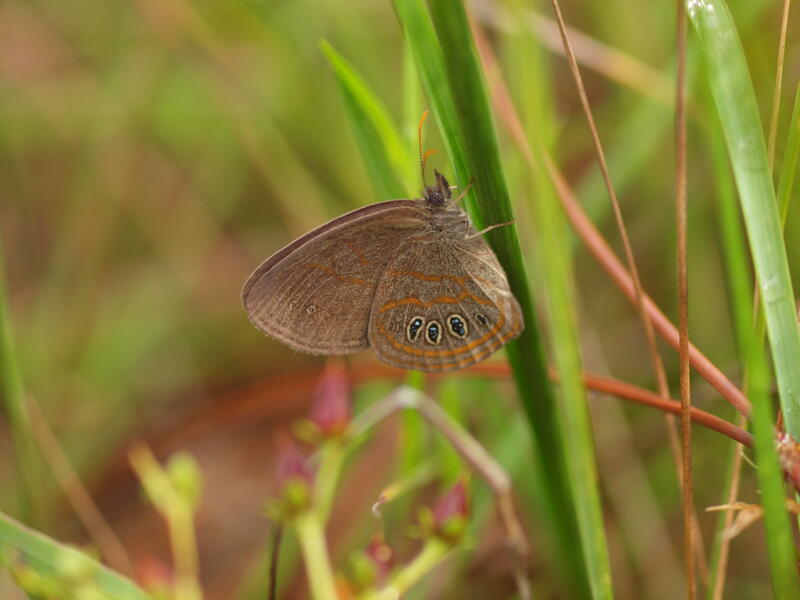
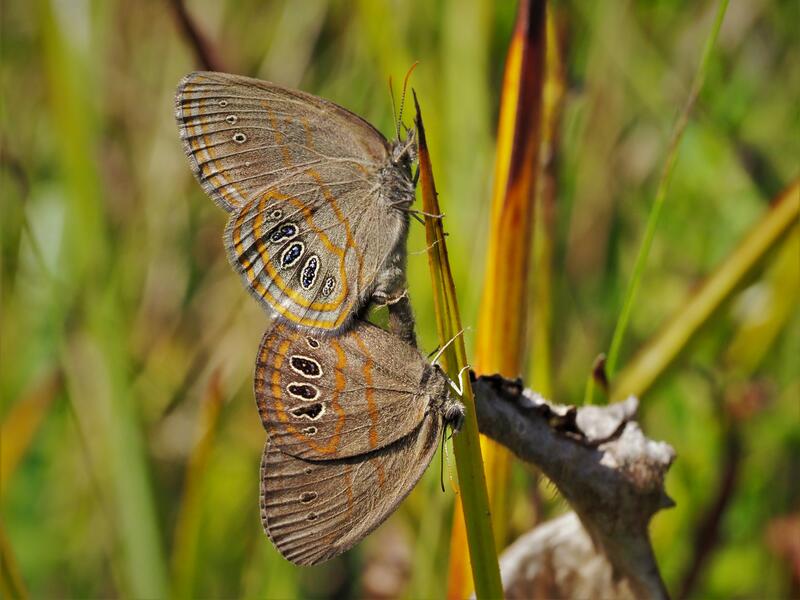
A satyr with a dark brown unmarked upperside and notable underside. The hind wing underside has three distinct elongated eyespots and one (sometimes two) much smaller eyespots. Distinct orange lines run along the wings and encircle the eyespots.
Georgia satyr and Helica satyr were once thought to be the same species.
Wetland areas, including bogs, meadows, and pine flats.
Larvae probably eat sedges. Adult nectar sources have not been reported.
Adults have a bobbing flight pattern typical of many satyrs. They stop often to rest on vegetation. Brood numbers vary by location. Georgia has the potential to have two or more broods per year. Eggs are laid singly on vegetation. Fourth instar larvae may overwinter in a dormant state.
This species has not been documented in Georgia for several years. Surveys are necessary to know if any populations remain in the state.
Southeastern United States from Virginia south to the Florida Keys. Along the Gulf of Mexico as far West as Texas. Historic records farther north to New Jersey and north of the Gulf of Mexico into Oklahoma and Arkansas.
Reduction in wetlands. Pesticide use.
| Threat 1 | Threat 2 | Threat 3 | |
|---|---|---|---|
| General Threat | Natural system modifications | Pollution | Agriculture & aquaculture |
| Specific Threat | Fire & fire suppression | Air-borne pollutants | Wood & pulp plantations |
The Georgia satyr has not been documented in the state for several years.
Maintain and restore wetland habitats. Sparing use of pesticides as exposure will likely kill any individual exposed.
“Georgia Satyr Neonympha Areolatus (J.E. Smith, 1797).” Georgia Satyr Neonympha Areolatus (J.E. Smith, 1797) | Butterflies and Moths of North America, Butterflies and Moths of North America, 11 Oct. 2019, https://www.butterfliesandmoths.org/species/Neonympha-areolatus.
Anna Yellin
December 27, 2019