


Loading profile. Please wait . . .
Leptoxis foremani (I. Lea, 1843)
Interrupted Rocksnail




Federal Protection: Listed Endangered
State Protection: Endangered
Global Rank: G1
State Rank: S1
Element Locations Tracked in Biotics: Yes
SWAP 2015 Species of Greatest Conservation Need (SGCN): Yes
SWAP 2025 Species of Greatest Conservation Need (SGCN): Yes
2025 SGCN Priority Tier: Highest Conservation Concern
Element Occurrences (EOs) in Georgia: 1
Habitat Summary for element in Georgia: Rocky shoals in current
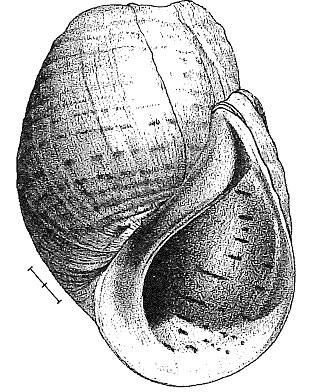
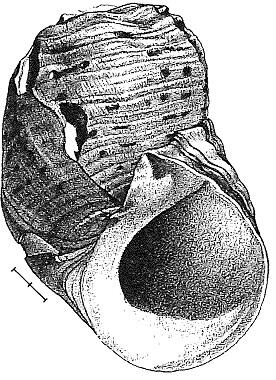
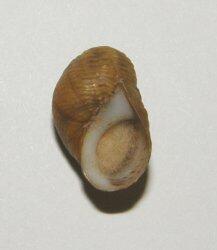
Shell is typically oval to globose is shape with a maximum length of approximately 20 mm (⅞ inch). Typically with three or less whorls and small striations covering the whorls. Periostracum light brown to orange, but some folds may be darker. Younger individuals often orange. Sutures very pronounced, but shoulders are week. Columnella purple to white, darkening toward the base. Juveniles distinguishable from other juveniles of Leptoxis by tightly coiled whorls and strong placations. Operculum typically red with coarse growth lines.
None
Shallow runs with clean, mixed substrates, free of silt. Prefers velocities of 20 - 40 cm/second (Johnson and Evans 2000).
The diets of many freshwater gastropods likely consists of algae and/or bacteria which they scrape from the substrate, woody debris, and vegetation along waterways.
Females deposit their eggs from March through May. Individuals are thought to reproduce at age two and live until five years of age.
Surveys should be conducted within the historic range in of this species in Georgia to locate any potential suitable habitat and reassess the status of this species. In addition, the 2015 Georgia State Wildlife Action Plan technical team recommended annual monitoring of the only existing population of this species to assess population trends.
Endemic to the Coosa River basin, historically from the middle Coosa to the headwaters of the basin in the Conasauga, Coosawatee, and Etowah Rivers in Georgia. Currently restricted to a 12 km (7.2 miles) reach of the Oostanaula River in Gordon and Floyd Counties, Georgia.
Excess sedimentation due to inadequate riparian buffer zones, development, and agriculture cover suitable habitat. Poor agricultural practices may also cause eutrophication and degrade water quality. The primary problem seems to be severe water quality degradation in the Oostanaula River since 2000.
| Threat 1 | Threat 2 | Threat 3 | |
|---|---|---|---|
| General Threat | Other options | Pollution | Agriculture & aquaculture |
| Specific Threat | Other threat | None | None |
The Interrupted Rocksnail is not known from any state or federal lands in Georgia. Unlike terrestrial species, the occurrence of an aquatic species on state or federal lands may not eliminate habitat degradation due to the influences of upstream and downstream disturbances.
Minimizing sedimentation in the Oostanaula River will help recover suitable habitat for the Interrupted Rocksnail. If suitable habitat can be restored, species restoration through re-introduction/augmentation may be effective in increasing the range and abundance of the species.
Johnson, P.D. 2004. Interrupted rocksnail Leptoxis formani. Pp. 116 in R.E. Mirarchi, J.T. Garner, M.F. Mettee, P.E. O’Neil (eds.). Alabama Wildlife, Volume 2, Imperiled Aquatic Mollusks and Fishes. The University of Alabama Press, Tuscaloosa.
Jason Wisniewski
2018-03-20