


Loading profile. Please wait . . .
Epioblasma othcaloogensis (I. Lea, 1857)
Southern Acornshell




Federal Protection: No US federal protection
State Protection: No Georgia state protection
Global Rank: GX
State Rank: SX
Element Locations Tracked in Biotics: Yes
SWAP 2015 Species of Greatest Conservation Need (SGCN): No
SWAP 2025 Species of Greatest Conservation Need (SGCN): No
2025 SGCN Priority Tier:
Element Occurrences (EOs) in Georgia: 5
Habitat Summary for element in Georgia: Small to medium sized rivers
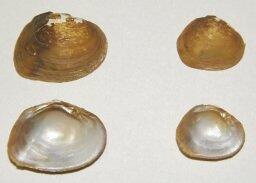
Shell profile is subtriangular to oval and rarely exceeds 32 mm (1⅜ inches) in length. Umbo positioned slightly anteriorly of middle of valves and is elevated well above the hingeline. Anterior margins rounded and posterior margins rounded to truncate in males. Females exhibit relatively indistinct extrapallial swelling. Ventral margin typically straight. The periostracum is glossy yellow, rarely with rays. Pseudocardinal teeth thin but well defined with two in left valve. Lateral teeth short, straight, and double in left valve. Umbo cavity shallow. Nacre color typically white.
None
The preferred habitat for this species is poorly documented. However, it has been collected from medium to large rivers with moderate current and gravel or sand substrates.
The diets of unionids are poorly understood but are believed to consist of algae and/or bacteria. Some studies suggest that diets may change throughout the life of a unionid with juveniles collecting organic materials from the substrate though pedal feeding and then developing the ability to filter feed during adulthood (Vaughn and Hakenkamp 2001).
The life history of this species is poorly understood, but may be similar to that of other species in the genus Epioblasma, which release glochidia in the late spring through early summer and utilize darters or Sculpins as hosts.
Surveyors should consider sampling during periods when female individuals are spawning or brooding as this species may have higher detection rates during this period. However, since basic life history information for many of Georgia’s unionids is lacking, sampling during periods when closely related species are spawning or brooding may increase probability of detection. The southern acornshell is thought to be extinct, but it is possible that the species may still occur in extremely low densities. Due to the potentially low densities, it may be necessary to sample sites multiple times in multiple seasons to account for lower detection probabilities.
This species is endemic to the Coosa River Basin upstream of the Fall Line in Alabama, Georgia, and Tennessee. In Georgia, the southern acornshell is only known from the Conasauga and Chattooga Rivers as well as the type locality in Othcalooga Creek.
Excess sedimentation due to inadequate riparian buffer zones, development, and agriculture covers suitable habitat and could potentially bury mussels. Poor agricultural practices may also cause eutrophication and degrade water quality. Industrial effluent as well as sewage treatment plant discharges may also be degrading water quality.
The Southern Acornshell is not known to occur on any state properties in Georgia. Unlike terrestrial species, the occurrence of an aquatic species on state or federal lands may not eliminate habitat degradation due to the influences of upstream and downstream disturbances.
The Southern Acornshell may be extinct and was proposed for delisting as no live specimens have been collected since 1973. A comprehensive survey of the upper Coosa River Basin of northwest Georgia from 2015-2017 failed to find any evidence of an extant population.
Hartfield, P.W. 2006. Five-year review of 11 listed mussels in the Mobile River Basin. U.S. Fish and Wildlife Service, Ecological Services, Jackson, Mississippi. 38 pp.
Vaughn C.C. and C.C. Hakenkamp. 2001. The functional role of burrowing bivalves in freshwater ecosystems. Freshwater Biology 46: 1431-1446.
Williams, J.D., A.E. Bogan, and J.T. Garner. 2008. Freshwater mussels of Alabama and the Mobile Basin in Georgia, Mississippi, and Tennessee. The University of Alabama Press, Tuscaloosa.
Jason Wisniewski
2008-09-01