


Loading profile. Please wait . . .
Crataegus pulcherrima Ashe
Beautiful Hawthorn




Federal Protection: No US federal protection
State Protection: No Georgia state protection
Global Rank: G2G4
State Rank: S3?
Element Locations Tracked in Biotics: Watch List
SWAP 2015 Species of Greatest Conservation Need (SGCN): No
SWAP 2025 Species of Greatest Conservation Need (SGCN): No
2025 SGCN Priority Tier:
Element Occurrences (EOs) in Georgia: 1
Habitat Summary for element in Georgia: Rich, open deciduous woods; soils with iron clay
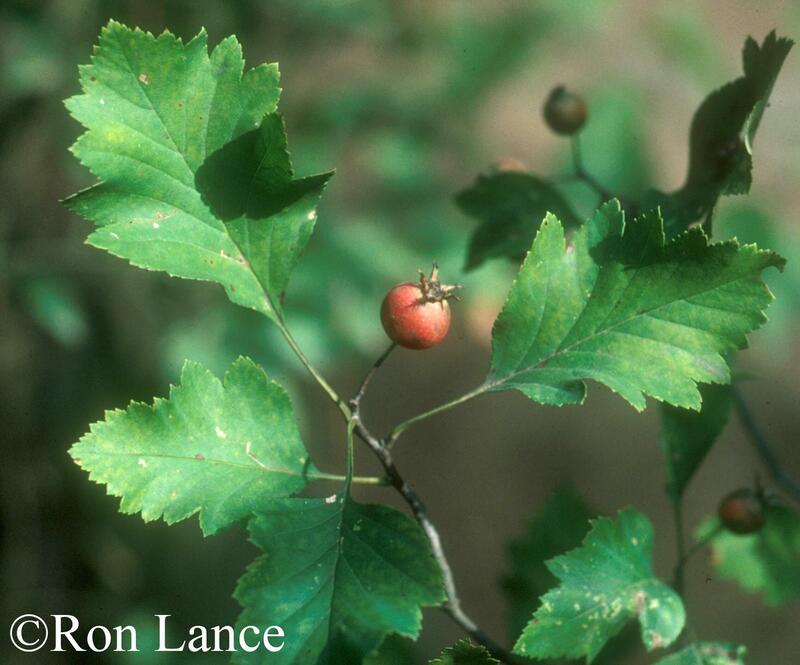
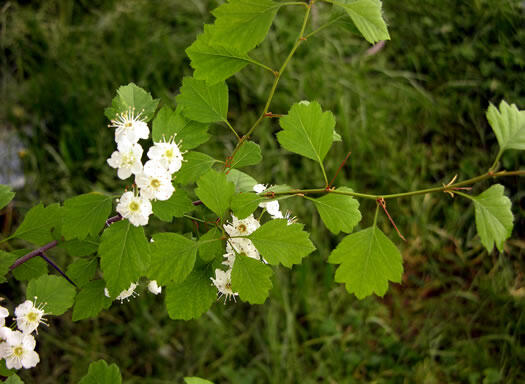
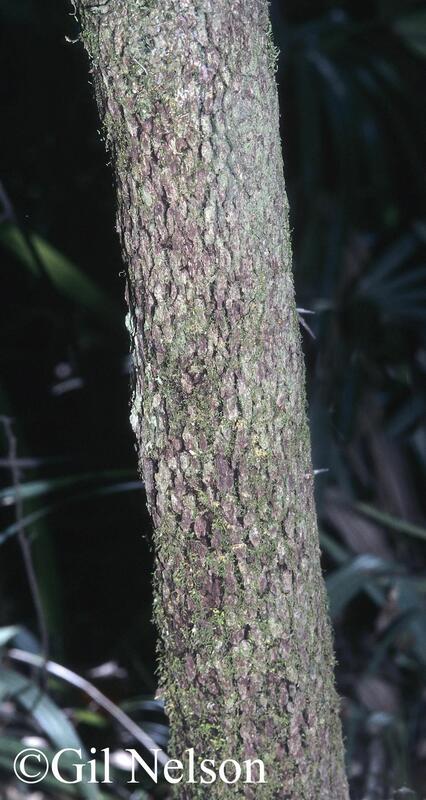
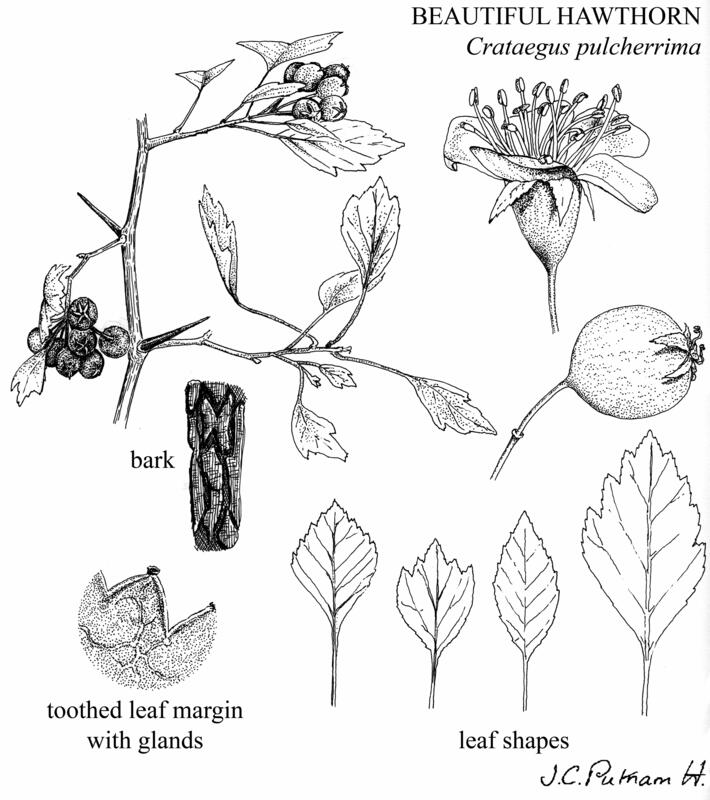
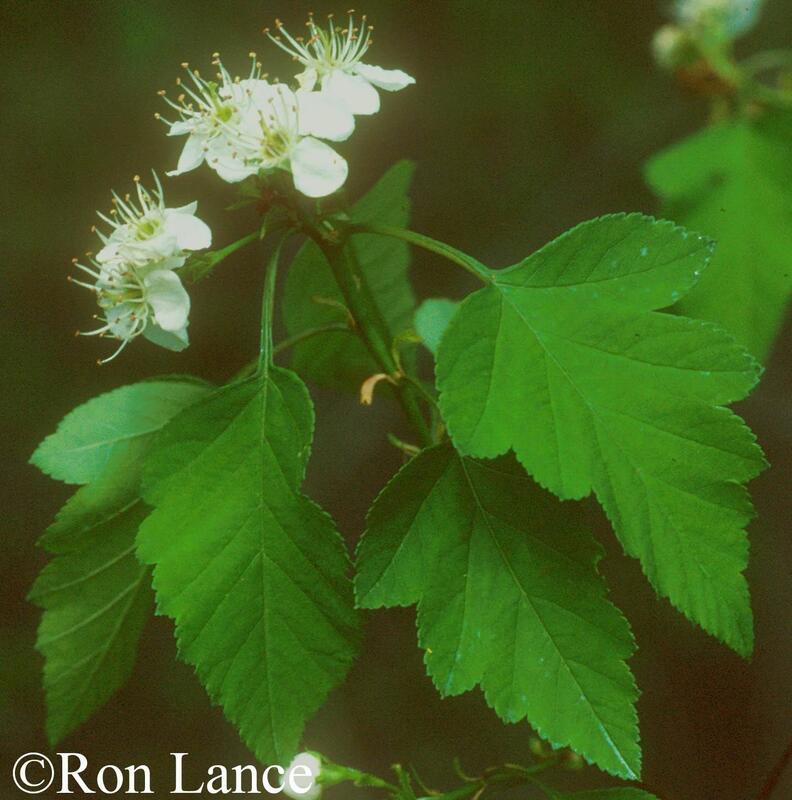
Small tree up to about 25 feet (7.5 meters) tall and up to 6 inches (15 cm) in diameter; bark of the main trunk is brown and furrowed. Twigs with many slender, straight, shiny, brown thorns, 0.75 - 1.5 inches (2 - 4 cm) long. Leaves are 1.2 - 2.4 inches (3 - 6 cm) long, dark green on the upper surface, yellow-green on the lower surface, oval in outline, evenly lobed, with tapering bases; the margins are toothed, and each tooth is tipped with a tiny red gland; the primary lateral veins are straight and parallel, and the secondary veins are nearly invisible; the leaf stalks are up to 0.8 inch (2 cm) long, usually with reddish glands. Flower clusters have 5 - 10 flowers. Flowers are 0.5 - 1 inch (1.2 - 2.5 cm) wide, with 5 white or pink-tinged petals and 20 white stamens, each tipped with a dark pink anther. Fruits are small, usually 0.2 - 0.4 inch (0.5 - 1 cm) wide, nearly round, usually red (occasionally yellow) when mature, with dry or mealy flesh and 3 - 5 seeds; fruits may persist through the winter.
Many Crataegus species have similar leaves and flowers. Beautiful Hawthorn is distinguished by the combination of straight twigs; evenly lobed leaves with glandular margins and straight, parallel lateral veins; flowers with 20 stamens; small fruits; and brown, furrowed bark.
There are 8 rare species of Crataegus in Georgia:
Crataegus aemula (Rome Hawthorn) occurs in upland hardwood and pine-hardwood forests over sandstone, limestone, or circumneutral clay soils in northwest Georgia. For more information, see: https://www.georgiabiodiversity.org/portal/profile?group=plants&es_id=20903
Crataegus aprica (Sunny Hawthorn) occurs in open,sandy, rocky dry sites in lower elevation mountains and perhaps Piedmont. For more information, see: http://beta.floranorthamerica.org/Crataegus_aprica
Crataegus brachyacantha (Blueberry Hawthorn) occurs in open pinelands in southwest Georgia. For more information, see: http://beta.floranorthamerica.org/Crataegus_brachyacantha
Crataegus calpodendron (Pear Hawthorn) occurs in moist, calcareous forests in northwest Georgia, the Piedmont, and upper Coastal Plain. For more information, see: http://beta.floranorthamerica.org/Crataegus_calpodendron
Crataegus dispar (Aiken Hawthorn) occurs in dry, upland pine or pine-oak forests in well drained
clay or sandy soils in the upper Coastal Plain. For more information, see: http://beta.floranorthamerica.org/Crataegus_dispar
Crataegus mendosa (Albertville Hawthorne) occurs in rocky woods, glades, hardwood forests, mixed pine-hardwood forests, and upland wooded hills over calcareous substrates and well-drained clays in Georgia's Piedmont and Coastal Plain. For more information, see: http://beta.floranorthamerica.org/Crataegus_mendosa
Crataegus mollis (Downy Hawthorn) occurs in moist forests, alluvial forests, wooded uplands over basic or calcareous soils in Georgia's Piedmont and northwestern counties. For more information, see: http://beta.floranorthamerica.org/Crataegus_mollis
Crataegus triflora (Three-flower Hawthorn) occurs in hardwood forests on rocky, limestone slopes in northwest Georgia and in Black Belt prairies in the upper Coastal Plain. For more information, see: https://www.georgiabiodiversity.org/portal/profile?group=plants&es_id=21985
Deciduous, upland hardwood forests and hardwood-pine woodlands in ravines and on moist slopes, with iron-rich soils high in clay or loam.
Little is known about the biology of Beautiful Hawthorn except that it reproduces sexually and does not spread vegetatively. Other hawthorns are pollinated by bees, butterflies, and beetles that are attracted by their showy flowers and nectar. Hawthorn fruits are eaten by birds, which disperse the seeds; seed germination is improved if the seed passes through a bird’s digestive tract and if the seed has been through one cold winter.
Surveys are best conducted during flowering (late March–mid-April), when leaves are half or more expanded, and during fruiting (September–October).
Georgia, Florida, Alabama, Mississippi, and Louisiana.
Logging, clearing, and conversion of habitat to pine plantations and developments.
Two populations are known on public lands in southwest Georgia; one population in Floyd County occurs on private land.
Protect high quality hardwood forests from clearing and development. Avoid use of fire in these habitats.
Lance, R. 2014. Haws: a guide to the hawthorns of the southeastern United States. Published by the author and available from www.florramontivaga.com.
Lance, R. 2004. Woody plants of the southeastern United States: a winter guide. University of Georgia Press, Athens.
Lance, R. 2006. The hawthorns of Georgia. Tipularia 21: 15-39.
NatureServe. 2019. Species account for Crataegus pulcherrima. NatureServe Explorer. Arlington, Virginia. https://explorer.natureserve.org/Taxon/ELEMENT_GLOBAL.2.143990/Crataegus_pulcherrima
Phipps, J.B. 2015. Species account for Crataegus pulcherrima. Flora of North America North of Mexico, vol. 9. http://beta.floranorthamerica.org/Crataegus_pulcherrima
Weakley, A.S. 2015. Flora of the southern and mid-Atlantic States. University of North Carolina Herbarium, University of North Carolina, Chapel Hill. http://www.herbarium.unc.edu/flora.htm
Linda G. Chafin
L. Chafin, Jan. 2009: original account
K. Owers, Jan. 2010: updated status and ranks, added pictures
L. Chafin, Feb 2020: updated original account.