


Loading profile. Please wait . . .
Trimerotropis saxatilis McNeill, 1900
Lichen Grasshopper




Federal Protection: No US federal protection
State Protection: No Georgia state protection
Global Rank: G3
State Rank: S3
Element Locations Tracked in Biotics: Yes
SWAP 2015 Species of Greatest Conservation Need (SGCN): Yes
SWAP 2025 Species of Greatest Conservation Need (SGCN): Yes
2025 SGCN Priority Tier: Moderate Conservation Concern
Element Occurrences (EOs) in Georgia: 17
Habitat Summary for element in Georgia: Granite flatrock outcrops.
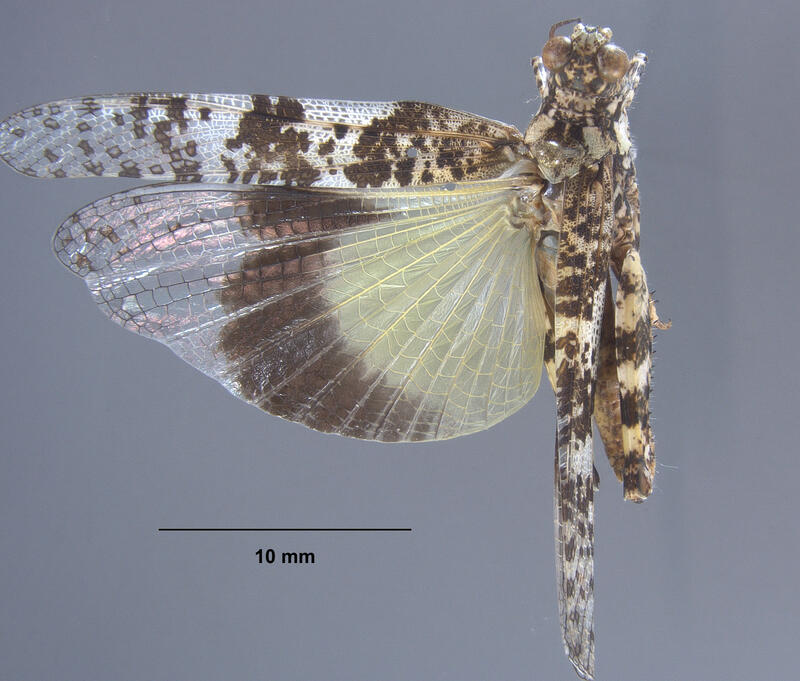
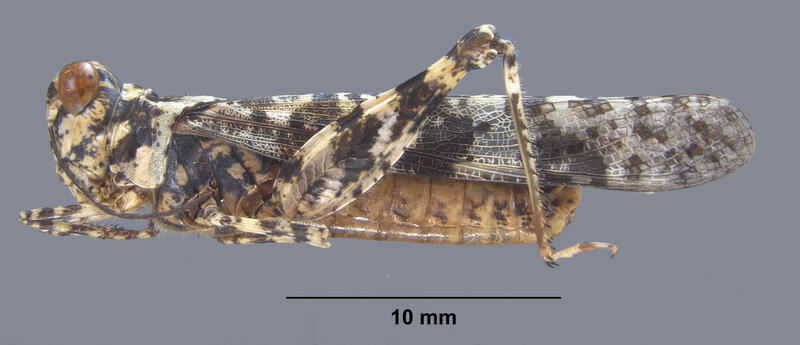
Males of this species are anywhere from 23-30 mm (0.91-1.81 inches) in length, whereas females are 28-38 mm (1.10-1.50 inches). Usually, they are speckled and their color most closely resembles the rocks and lichens they are found on. Darker specimens tend to be black while lighter-colored specimens are a pale green to match the lichen colonies. Hind tibiae range from yellow to dark brown.
Trimerotropis pallididpennis is western in its distribution and the ranges do not overlap.
The lichen grasshopper is found on lichen-encrusted rockfaces, typically at the summit of mountains and hills. Often, it is seen in more open and unprotected, sun-scorched glades, but it may also be found in smaller glades among old-growth forest.
It is generally accepted that this species feeds on the lichens it is found among.
Like all Orthopterans, the lichen grasshopper undergoes an incomplete metamorphosis.
Flushing the grasshoppers from the ground and observing where they land is the best way to locate specimens. Actively pursuing them with a net is the best way to capture specimens.
Threats to this grasshopper are several. The glades where they reside offer little to no economic benefits or returns and may be viewed as waste areas by landowners. A lack of education on the ecologic significance of these sites among landowners and land managers leads them to feel that the only proper use may be as dump-sites for trash, and for recreational vehicle trackways. On another front, while the glade habitats are edaphic, maintained by characteristically shallow or nonexistent soil depositions, encroachment by some woody species like eastern redcedar (Juniperus virginiana) threatens to block out sunlight required by the lichens and characteristic glade forbs that support T. saxatilis.
| Threat 1 | Threat 2 | Threat 3 | |
|---|---|---|---|
| General Threat | Residential & commercial development | Natural system modifications | Pollution |
| Specific Threat | Housing & urban areas | Fire & fire suppression | Air-borne pollutants |
The best conservation measure for this species is the long-term preservation of the glades where it occurs. In glades which may have historically been more open and unprotected, remove encroaching brush. Some glades benefit from the disturbance provided by fire and controlled burnings can aid in rejuvenating the local flora, as well as maintaining the woody vegetation on the glades’ margins. Removal of trash piles and discouraging the dumping of waste might seem insignificant, but it can actually be a strong step to the reclamation of the lichen grasshopper’s habitat, especially on smaller fragmented glades. Of great importance, is ensuring protections against graffiti artists and motorists driving atv’s, bikes, and other large vehicles or equipment. Routinely walking across lichen communities can be highly detrimental, as well, and it would be recommended to avoid any unnecessary foot traffic.
Brady S. Dunaway
12/2/2019