


Loading profile. Please wait . . .
Hesperia meskei (Edwards, 1877)
Meske's Skipper




Federal Protection: No US federal protection
State Protection: No Georgia state protection
Global Rank: G3G4
State Rank: S2S3
Element Locations Tracked in Biotics: Yes
SWAP 2015 Species of Greatest Conservation Need (SGCN): Yes
SWAP 2025 Species of Greatest Conservation Need (SGCN): Yes
2025 SGCN Priority Tier: Moderate Conservation Concern
Element Occurrences (EOs) in Georgia: 19
Habitat Summary for element in Georgia: sandhills
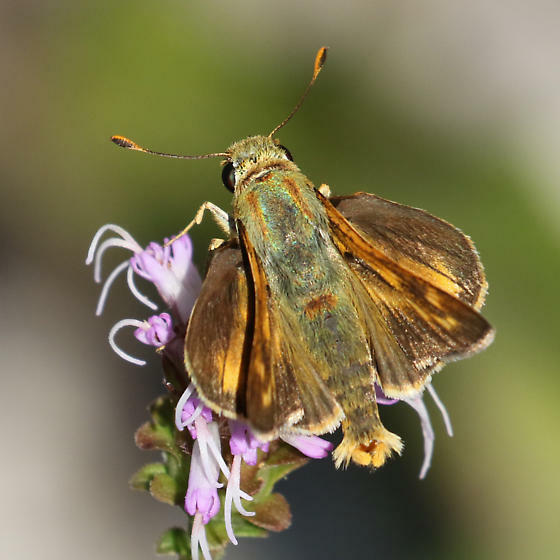
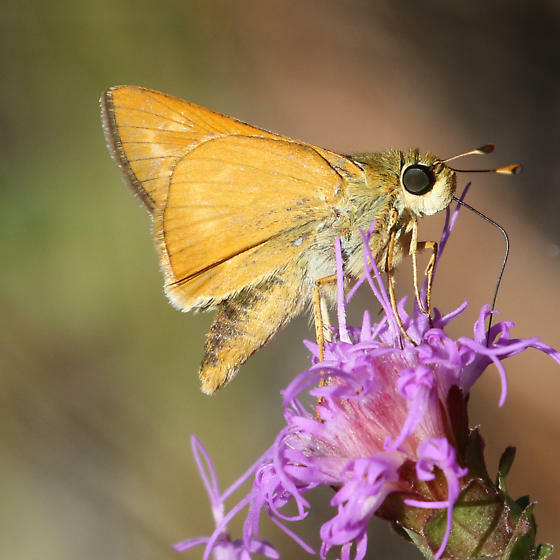
A medium sized skipper (27 - 35 mm). The uppersides of the wings are dark brown with golden markings. The undersides of the wings are golden with paler markings.
Similar species include the firey skipper (Hylephila phyleus) and the sachem (Atalepedes campestris).
Typical habitat is sandhills/ longleaf pine communities. Dry, grassy, wooded habitats also provide necessary habitat componants. The larvae feeld on specific species of grasses.
Adult butterflies favor pink and purple flowers in the Asteraceae family. Preference for Liatria and Although in some locations, Lepidopteristis belifeve that the larvae feed on Little bluestem (Andropogon scoparius) and arrowfeather threeawn (Aristida purpurascens), not all butterfly experts agree.
Single eggs are laid on grasses. It is possible that in Georgia there may be two broods as in other states.
Confirmation of the species of grass required by Meske's skipper larvae would greatly improve conservation efforts.
Southern North Carolina to the Florida Keys. Scattered populations west to Texas. Locations in Georgia are unknown.
Habitat loss through development, agriculture, fire suppression, and spraying. Prescribed burns are best when patchy. Because it is unlikely that any life stages of the butterfly could survive fires, those living in unburned areas will need to repopuate burned areas. Fire ants may be a threat. Spraying for mosquitos may be detrimental to the species and likely contributed to the extincion of a subspecies of Meske's skipper in Florida (Hesperia meskei pinocayo).
| Threat 1 | Threat 2 | Threat 3 | |
|---|---|---|---|
| General Threat | Natural system modifications | Pollution | Natural system modifications |
| Specific Threat | Other ecosystem modifications | Air-borne pollutants | Other ecosystem modifications |
Only a few records exist in Georgia. More surveys are needed to search for this species.
Maintaining and restoring longleaf pine communities. Herbicide use should be sparing as it will impact the species if it is present.
Schweitzer, Dale F., Minno, Marc C. and David L. Wagner. 2018. Rare, Declining, and Poorly Known Butterflies and Moths (Lepidoptera) of Forests and Woodlands in the Eastern United States. 2nd Edition. USDA Forest Health Assessment and Applied Services Team. 517 pgs.
Anna Yellin
January 2, 2020