

Loading profile. Please wait . . .
Carex decomposita Muhl.
Cypress-knee Sedge




Federal Protection: No US federal protection
State Protection: No Georgia state protection
Global Rank: G3G4
State Rank: S2?
Element Locations Tracked in Biotics: Yes
SWAP 2015 Species of Greatest Conservation Need (SGCN): Yes
SWAP 2025 Species of Greatest Conservation Need (SGCN): Yes
2025 SGCN Priority Tier: High Conservation Concern
Element Occurrences (EOs) in Georgia: 7
Habitat Summary for element in Georgia: Swamps and lake margins on floating logs
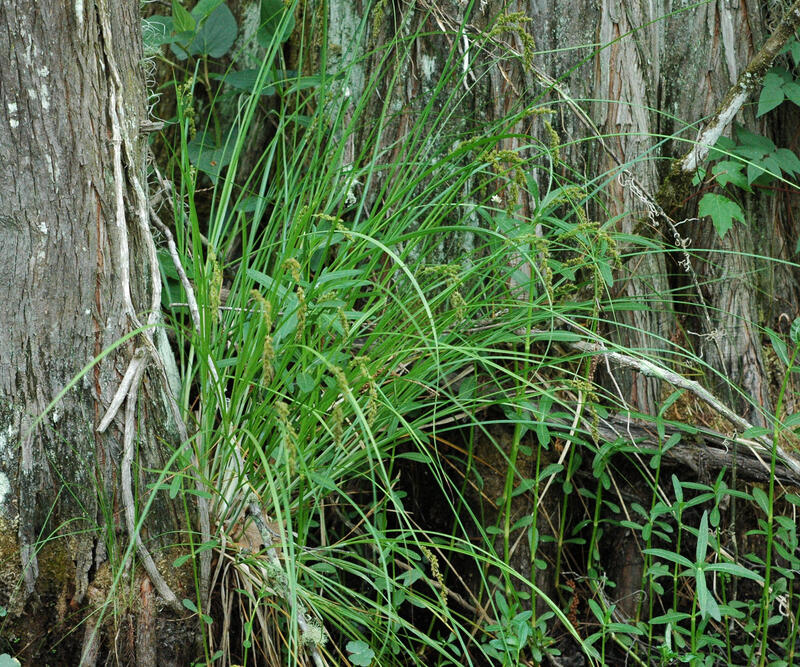
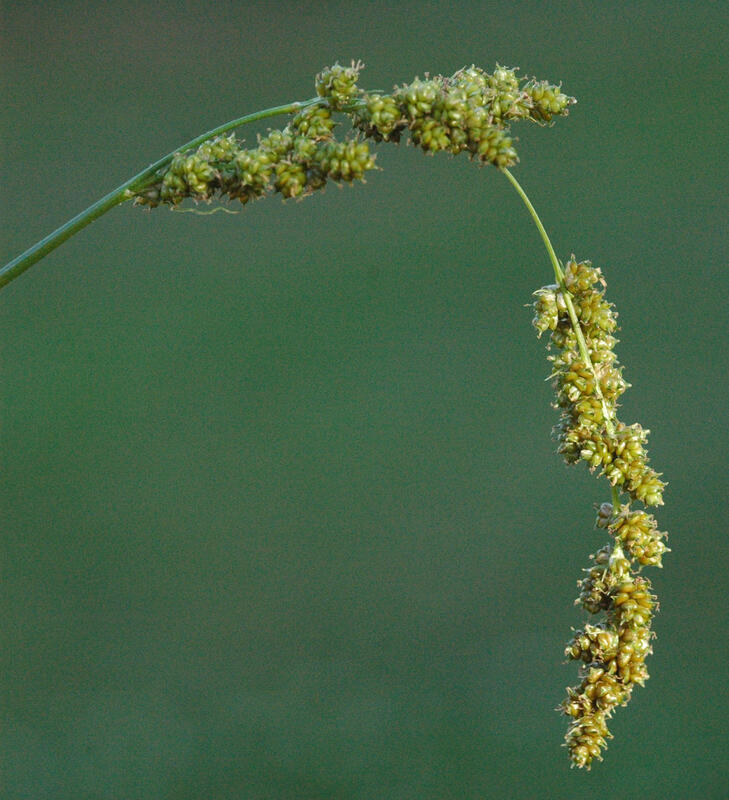
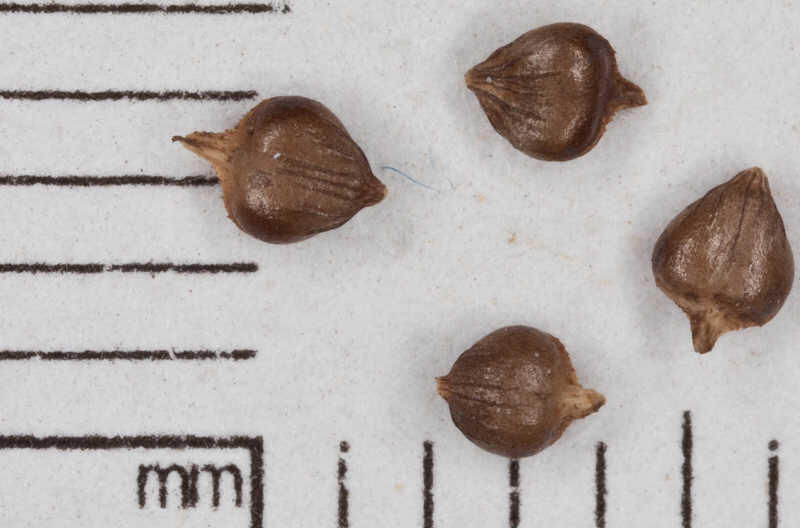
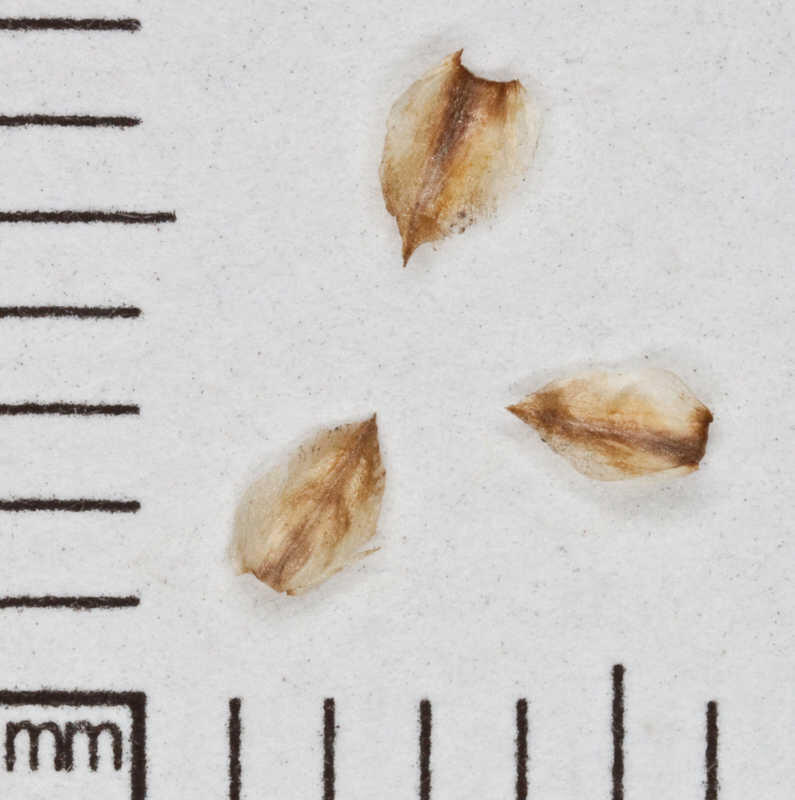
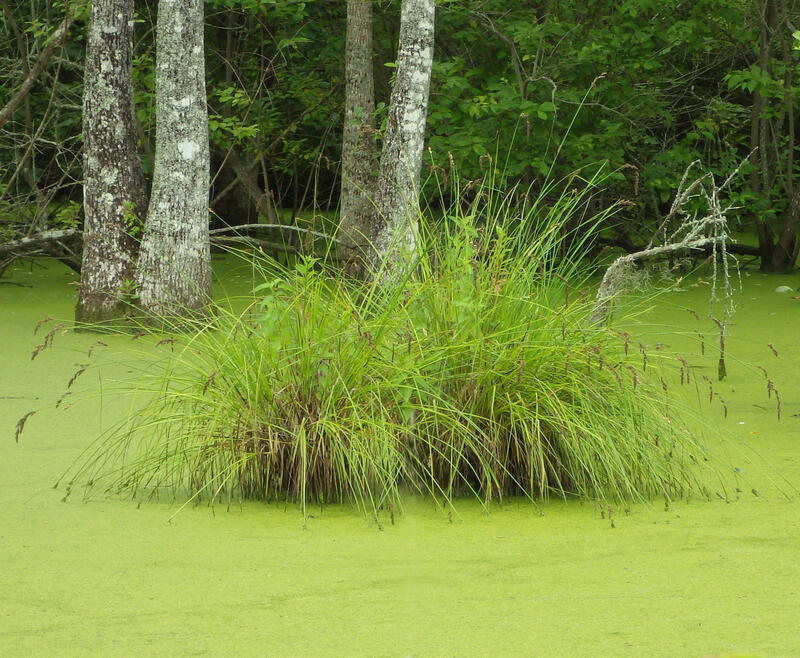
Perennial, grass-like herb forming very large, dense clumps growing on cypress knees, stumps, and buttresses at the water line and on floating, fallen logs. Leaf blades are 4 - 32 inches long and 0.1 - 0.3 inch wide (10 - 80 cm and 2.5 - 8 mm); leaf sheaths are heavily dotted with purplish-red. Flowering stems are 20 - 47 inches (50 - 120 cm) long, stout, three-angled, and branched near the tip to form an inflorescence, the lower branches well separated. Inflorescences are 2.4 - 7 inches long and 0.4 - 1.7 inches wide (6 - 18 cm long and 1 - 4.2 cm wide), curved or drooping from the tips of stems and branches, and composed of numerous spikes that are crowded with both female and male flowers. The pistillate (female, fruit-bearing) flowers consist of small, olive-green and/or brown sacs (perigynia) that closely envelop one tiny (1 mm long), oval, two-sided, seed-like fruit (an achene); two tiny style branches emerge from a short beak at the top of immature perigynia but are quickly lost as the fruit matures. The perigynia have 8 - 11 raised veins at the base. Beneath each perigynium there is a pale, papery, oval scale, about the same length as the perigynium, with a thickened midvein, pointed tip, and truncate base.
Cypress-knee Sedge can be distinguished in the field from other wetland sedges by a combination of these characters: large, clumped growth form perched on cypress knees and buttresses and on the bases and stumps of other trees, especially Nyssa, and on floating or downed logs; reddish-purple dots on leaf sheaths; and olive-green to brown perigynia.
Cypress-knee Sedge somewhat resembles Carex sparganioides (Bur-reed sedge) but this species occurs in moist to dry upland forests and has light green perigynia and green and white mottled leaf sheaths.
Other Carex species associated with cypress swamps include:
Carex glaucescens (Blue Sedge, Southern Waxy Sedge) has a waxy coating that gives the stems and inflorescences a pale, blue-green color; its leaves are strongly roughened on margins and upper surfaces.
Carex gigantea (Giant Sedge) has unbranched inflorescences, reddish-brown leaf sheaths, erect pistillate spikes, and perigynia with long, pointed beaks that give the spikes a bristly appearance.
Carex joorii (Hummock Sedge, Cypress-swamp Sedge) has waxy blue-green leaf sheaths and flower spikes and some or all of its spikes held on drooping stalks up to 2.4 inches (6 cm) long.
Carex stipata (Prickly Sedge) has unbranched, erect inflorescences, erect stems and pistillate spikes, and perigynia with long, pointed beaks that give the spikes a bristly appearance.
Forty-five species of Carex are rare in Georgia, see: https://georgiabiodiversity.org/portal/element_lists?group=plant
Detailed information about these 10 rare Carex species is provided on this website:
Acid-Loving Sedge (C. acidicola): https://georgiabiodiversity.org/portal/profile?group=plants&es_id=34933
Baltzell's Sedge (C. baltzellii): https://georgiabiodiversity.org/portal/profile?group=plants&es_id=15974
Granite Dome Sedge (C. biltmoreana): https://georgiabiodiversity.org/portal/profile?group=plants&es_id=19146
Lime-fleeing Sedge (C. calcifugens): https://georgiabiodiversity.org/portal/profile?group=plants&es_id=33655
Velvet Sedge (C. dasycarpa): https://georgiabiodiversity.org/portal/profile?group=plants&es_id=15939
Cypress-knee Sedge (C. decomposita): https://georgiabiodiversity.org/portal/profile?group=plants&es_id=21206
Meager Sedge (C. exilis): https://georgiabiodiversity.org/portal/profile?group=plants&es_id=34936
Wretched Sedge (C. misera): https://georgiabiodiversity.org/portal/profile?group=plants&es_id=16740
Radford’s Sedge (C. radfordii): https://georgiabiodiversity.org/portal/profile?group=plants&es_id=15374
Roan Mountain Sedge (C. roanensis): https://georgiabiodiversity.org/portal/profile?group=plants&es_id=21034
Thorne's Sedge (C. thornei): https://georgiabiodiversity.org/portal/profile?group=plants&es_id=34939
Cypress-knee Sedge grows on Pond Cypress knees, stumps, and buttresses and trunks and stumps of Swamp Black Gum at the water line and on floating, fallen logs in cypress-gum swamps, marshes, oxbow swamps, sinkhole ponds, and edges of sloughs, often on the bases of Swamp Black Gum (Nyssa biflora), Swamp Tupelo, Water Tupelo, and Buttonbush (Cephelanthus occidentalis).
Cypress-knee Sedge is a perennial, winter-green herb that reproduces by seed and by the spread of short rhizomes. It flowers and sets fruit from April through August. Like most sedges, it is wind-pollinated. The vegetation of wetland sedges (Carex spp.) is a source of food for a wide variety of adult and larval insects such as flies, aphids, leaf beetles, leafhoppers, skippers, butterflies, moths, and sedge grasshoppers. The seeds of Carex are eaten by ducks, rails, egrets, and other waterfowl. Seeds are also dispersed by birds who carry the seeds on their feet. Aquatic mammals such as muskrats and beaver feed on Carex roots and sprouts.
The habitat and growth form of Cypress-knee Sedge are distinctive year round. Fruiting occurs mid-April to August.
Georgia and Florida west to Texas and north to Michigan and New York. It is rare or presumed to be extirpated throughout much of its range.
Wetland habitats that sustain Carex decomposita have been widely destroyed or degraded by ditching, draining, and filling. Other threats include: hydrological alterations that lead to unnatural water level fluctuations (extreme floods and droughts can be fatal to this species), stream impoundment, logging, boat wakes, bridge, road, and boat ramp construction, conversion of cypress-gum ponds to stock ponds, and invasion of swamps and ponds by invasive plants such as Water Hyacinth and Chinese Privet.
| Threat 1 | Threat 2 | Threat 3 | |
|---|---|---|---|
| General Threat | Biological resource use | Human intrusions & disturbance | Natural system modifications |
| Specific Threat | None | None | None |
Carex decomposita is ranked S2 by the Georgia Department of Natural Resources, indicating that it is imperiled in Georgia. Seven populations have been documented in Georgia, two on conservation land. Only two populations have been verified in the last 15 years.
Monitor populations for threats caused by watershed-level disturbances especially those that lead to extreme fluctuations in water levels. Protect watersheds that support Carex decomposita from harmful development by land purchase and easement. Conduct new surveys of Coastal Plain wetlands. Remove invasive pest plants from wetlands.
Ball, P.W. and A.A. Reznicek. 2003. Species account for Carex decomposita. Flora of North America North of Mexico, vol. 23. Accessed 6 August 2019. http://www.efloras.org/florataxon.aspx?flora_id=1&taxon_id=242357150
GADNR. 2019. Element occurrence records for Carex decomposita. Georgia Department of Natural Resources, Wildlife Resources Division. Social Circle, Georgia.
Godfrey, R.K., and J.W. Wooten. 1979. Aquatic and wetland plants of southeastern United States: Monocotyledons. University of Georgia Press, Athens.
Hilty, J. 2019. Species accounts for wetland sedges, Carex spp. Illinois Wildflowers. Accessed 6 August 2019. https://www.illinoiswildflowers.info/grasses/grass_index.htm
NatureServe. 2019. Species account for Carex decomposita. NatureServe Explorer: an online encyclopedia of life, Version 7.1. NatureServe, Arlington, Virginia. Accessed 6 August 2019. http://explorer.natureserve.org/servlet/NatureServe?searchName=Carex+decomposita
Weakley, A.S. 2015. Flora of the southern and mid-Atlantic States. University of North Carolina Herbarium, University of North Carolina, Chapel Hill. http://www.herbarium.unc.edu/flora.htm
Linda G. Chafin
Linda G. Chafin, 7 August 2019: original account
Greg Krakow, 2 Feburary 2023: fixed spelling error in Larry Allain's name.