


Loading profile. Please wait . . .
Solidago porteri Small
Porter's Goldenrod




Federal Protection: No US federal protection
State Protection: No Georgia state protection
Global Rank: G1
State Rank: S1
Element Locations Tracked in Biotics: Yes
SWAP 2015 Species of Greatest Conservation Need (SGCN): No
SWAP 2025 Species of Greatest Conservation Need (SGCN): Yes
2025 SGCN Priority Tier: Highest Conservation Concern
Element Occurrences (EOs) in Georgia: 3
Habitat Summary for element in Georgia: Upland mixed pine-oak forests
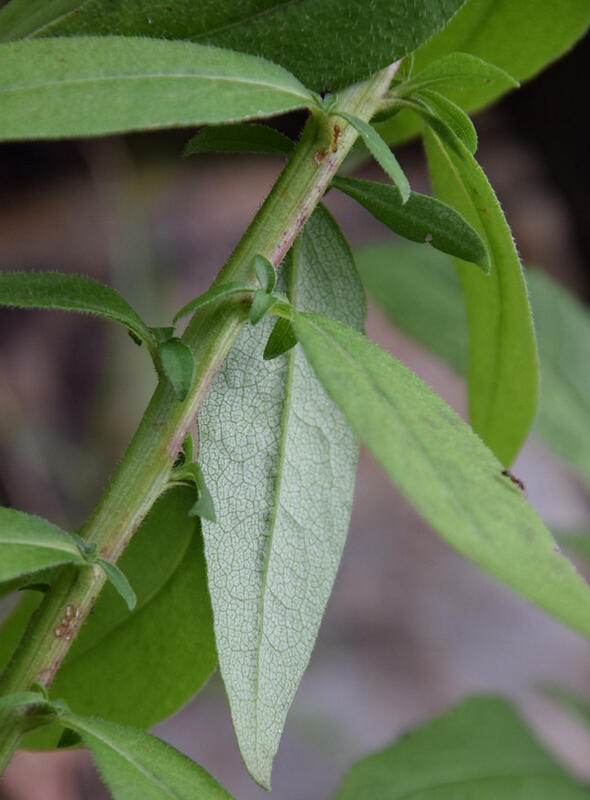
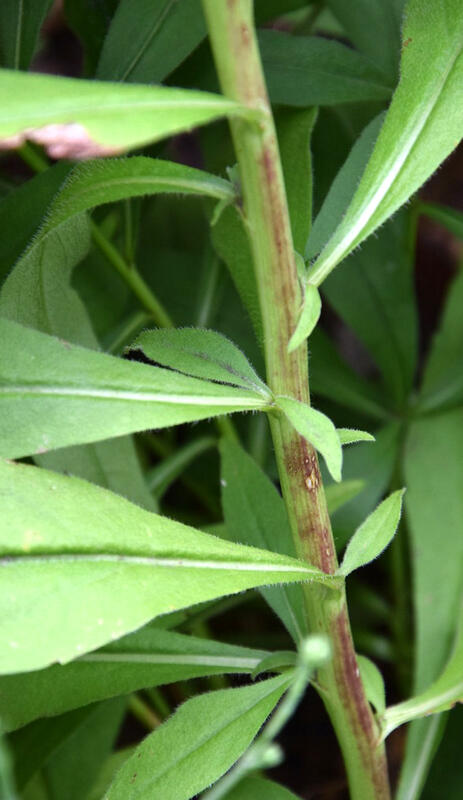
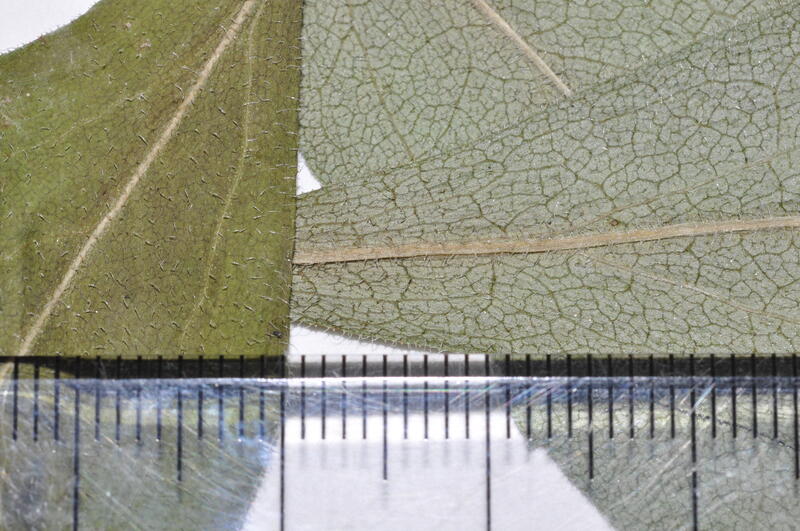
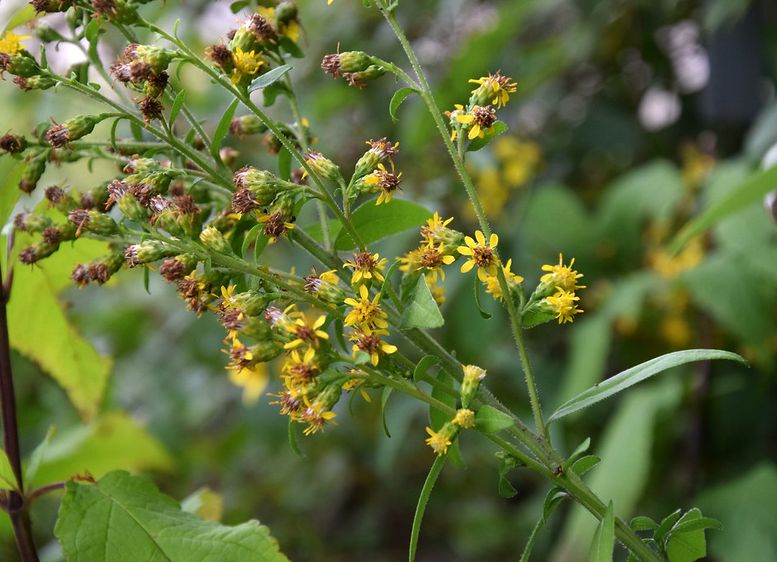
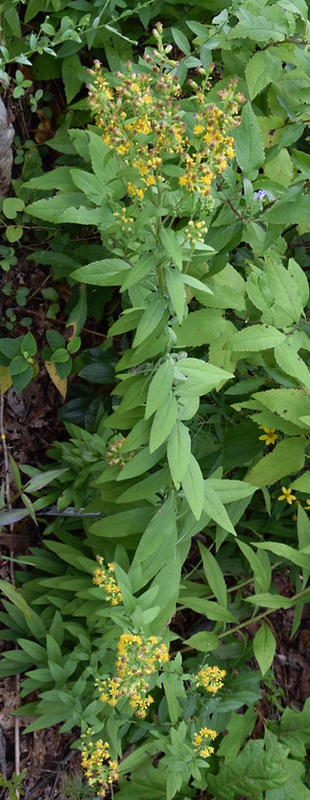
Perennial herb 1 - 3.5 feet (34 - 104 cm) tall. Stems 1 - 6 in number, rising from a central crown, hairless near the bottom and becoming hairy at mid-stem, with short, stiff hairs in the inflorescence; a rosette of leaves surrounds the base of the stem in early to mid-summer but withers away (as do the lower stem leaves) by flowering time. Stem leaves are 1.5 - 6 inches (3.8 - 15 cm) long and 0.3 - 2 inches (0.9 - 5.3 cm) wide, lower leaves are the largest and taper to winged leaf stalks, the upper leaves lack leaf stalks. Leaf blades are elliptic to lance-shaped, serrated with up to 17 teeth on each side (uppermost stem leaves have fewer teeth); the upper leaf surface is smooth or sparsely hairy, the lower surface has scattered short, stiff hairs, especially on the veins and margins; there are no resin glands on the leaves. The flower cluster is up to 9 inches high, held erect at the top of the stem, and is wand- to club-shaped, with short, leafy branches holding several flower heads. Flower heads are on short stalks, each head up to 0.4 inch (9.5 mm) high and wide, with 4 - 8 yellow ray flowers (each up to 4.5 mm long) and 9 - 15 yellow disk florets. The base of the flower head is surrounded by 3 or 4 whorls of small, green-and-white involucral bracts with rounded tips. Fruits are very small, dry, seed-like achenes, usually smooth, but sometimes sparsely hairy, up to 3.5 mm long.
Porter’s Goldenrod resembles several other goldenrod species–including Hairy Goldenrod (Solidago hispida var. hispida), Downy Goldenrod (S. petiolaris), and Erect Goldenrod (S. erecta)–that occur in similar habitats in north Georgia. Porter’s Goldenrod is distinguished by a combination of these traits: smooth lower stems, hairy middle to upper stems, no basal leaf rosette at flowering time, stem leaves with scattered stiff hairs on the lower surface and margins, lower leaves that are the largest, flower clusters that are elongated and wand- or club-shaped, and relatively large flower heads with showy ray flowers.
Five other goldenrods are rare in Georgia:
Solidago arenicola (Black Warrior Goldenrod) occurs in bouldery and cobbled riversides in northwest Georgia. For more information, see: https://www.georgiabiodiversity.org/portal/profile?group=plants&es_id=34012
Solidago georgiana (Georgia goldenrod) occurs in sandhills in southeast Georgia. For more information, see: https://www.researchgate.net/publication/319206083_Solidago_georgiana_ Asteraceae_Astereae_a_new_species_in_S_subsect_Squarrosae_from_Georgia
Solidago simulans (Cliffside Goldenrod) occurs on seepy granite domes and high-elevation cliffs in northeast Georgia. For more information, see: https://www.georgiabiodiversity.org/portal/profile?group=plants&es_id=17265
Solidago uliginosa var. uliginosa (Bog Goldenrod) occurs in mountain bogs in northeast Georgia. For more information, see: http://www.efloras.org/florataxon.aspx?flora_id=1&taxon_id=250067581
Solidago ulmifolia var. ulmifolia (Elmleaf Goldenrod) occurs in rocky mafic woodlands and calcareous glades in northwest Georgia. For more information, see: http://www.efloras.org/florataxon.aspx?flora_id=1&taxon_id=242417300
Oak savannas, dry oak-pine woodlands, woodland edges including along roadsides and pine plantations.
Porter’s Goldenrod is a perennial herb in the Aster family (Asteraceae). Like most members of the Aster family, its flower heads consist of a cup-like involucre of green phyllaries (involucral bracts), a whorl of colorful ray flowers, and a central disk of numerous small florets. The ray flowers of goldenrods are fertile, female only, and capable of producing seeds; the disk flowers are bisexual (having both female and male parts) and are also fertile and capable of producing seeds. No pollination studies have been conducted on Porter’s Goldenrod, but goldenrods are typically pollinated by a wide variety of insects including bees, butterflies, flies, beetles, and wasps. Small, barbed bristles are attached to the top of the fruits and aid in seed dispersal by clinging to fur and feathers.
Surveys are best conducted during flowering (August–September).
Georgia, Tennessee, and Alabama (possibly extirpated). It is critically imperiled throughout its range.
Road widening and highway right-of-way maintenance and herbicide application, fire suppression in woodlands, conversion of oak savanna and woodland habitat to pine plantations and residentical and commercial development.
| Threat 1 | Threat 2 | Threat 3 | |
|---|---|---|---|
| General Threat | Transportation & Service Corridors | Residential & commercial development | Invasive & other problematic species, genes & diseases |
| Specific Threat | None | None | None |
Porter’s Goldenrod is ranked S1 by the Georgia Department of Natural Resources, indicating that it is critically imperiled in Georgia. It has been documented only three times in Georgia, all in the Piedmont: in 1846 (location imprecise), in 1979 (in a state park), and in 2015 in a privately owned garden, from which it has since disappeared although offspring of this plant persist in another private garden.
Surveys for this species to confirm its current status are strongly recommended. Seeds from the extant garden population should be collected and propagated in a safeguarding location. Woodland and Piedmont prairie habitats should be burned occasionally and protected from development and other disturbances.
GADNR. 2019. Element occurrence records for Solidago porteri. Georgia Department of Natural Resources, Wildlife Resources Division. Social Circle, Georgia.
Honeycutt, E., T. Patrick, J.C. Semple. 2017. Solidago porteri: a goldenrod rediscovered. Tipularia 32: 44-48.
NatureServe. 2019. Species account for Solidago porteri. NatureServe Explorer: an online encyclopedia of life, Version 7.1. NatureServe, Arlington, Virginia. Accessed 8 June 2019. http://explorer.natureserve.org/servlet/NatureServe?searchName=Platanthera+blephariglottis
Semple, J.C. 2019. Email June 21, 2019, to Linda Chafin from John C. Semple, Professor Emeritus and Adjunct Professor, Biology Department, University of Waterloo, Ontario. Available on request.
Semple, J.C., and D. Estes. 2014. Discovery of Solidago porteri (Asteraceae: Astereae) in Alabama and Tennessee and a second population in Georgia. Phytoneuron 45:1-11. http://www.phytoneuron.net/2014Phytoneuron/45PhytoN-Solidagoporteri.pdf
Weakley, A.S. 2015. Flora of the southern and mid-Atlantic States. University of North Carolina Herbarium, University of North Carolina, Chapel Hill. http://www.herbarium.unc.edu/flora.htm
Semple, J.C. 2018. Solidago porteri, Porter's Goldenrod. University of Waterloo, Astereae Lab. https://uwaterloo.ca/astereae-lab/research/goldenrods/classification-and-illustrations/solidago-porteri
Tennessee Flora Committee. 2015. Guide to the vascular plants of Tennessee. University of Tennessee Press, Knoxville.
Linda G. Chafin
Linda G. Chafin, 24 June 2019: original account