


Loading profile. Please wait . . .
Angelica dentata (Chapman) Coult. & Rose
Sandhill Angelica




Federal Protection: No US federal protection
State Protection: No Georgia state protection
Global Rank: G2G3
State Rank: S2
Element Locations Tracked in Biotics: Yes
SWAP 2015 Species of Greatest Conservation Need (SGCN): No
SWAP 2025 Species of Greatest Conservation Need (SGCN): Yes
2025 SGCN Priority Tier: Highest Conservation Concern
Element Occurrences (EOs) in Georgia: 19
Habitat Summary for element in Georgia: Longleaf pine-wiregrass savannas
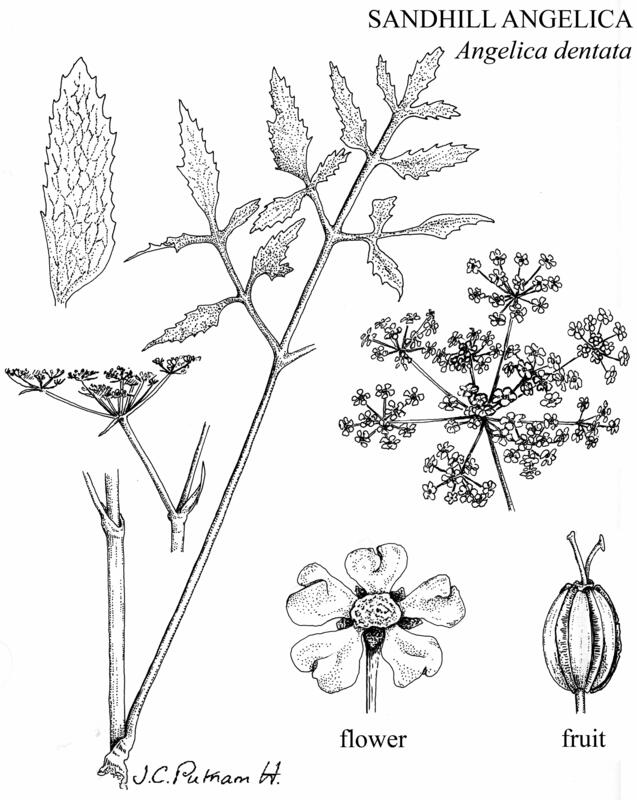
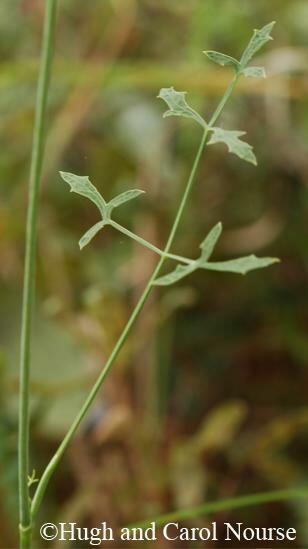
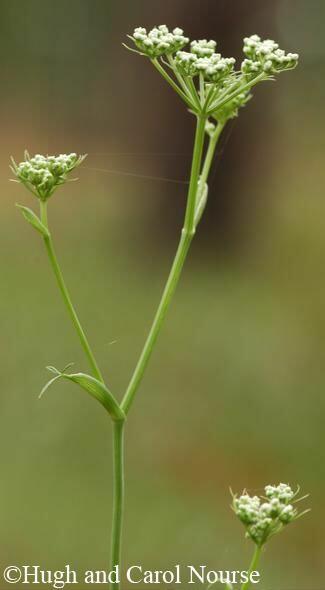
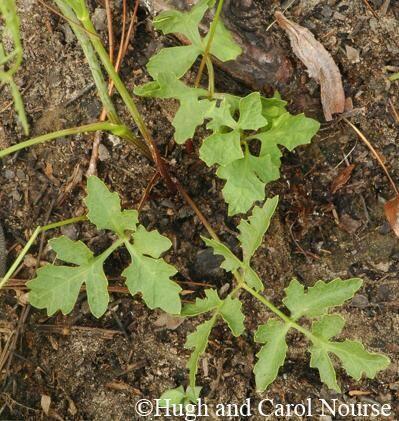
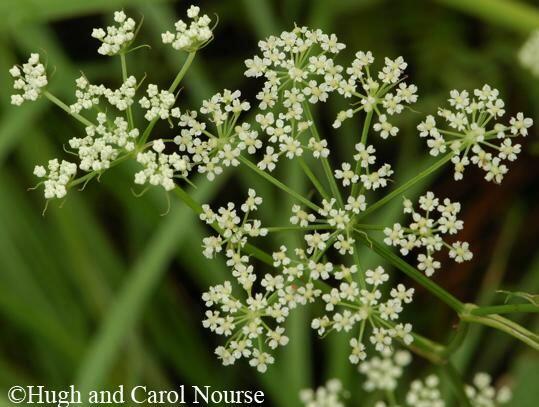
Perennial herb with erect, hairless stems 20 - 40 inches (50 - 100 cm) tall. Leaves have long leaf stalks that clasp the stem; each leaf is deeply divided into several, leathery, coarsely toothed and segmented leaflets; leaves are typically few in number. Flower clusters are flat-topped and composed of 5 - 12 smaller clusters of tiny, white flowers; flower stalks are hairless. Flowers have 5 white, spreading petals. The fruit is about 0.2 inch (5 - 6 mm) long, hairless, oval, flattened, ribbed, and winged.
Hairy Angelica (Angelica venenosa) also occurs in dry, Coastal Plain habitats. Its flower clusters, flower stalks, and fruits are very hairy; its leaflets are oval and finely toothed.
No other Angelica species are rare in Georgia.
Sandhills and dry pine flatwoods with Longleaf Pine canopy and Wiregrass-dominated ground layer.
Sandhill Angelica is a perennial herb, dying back to the ground in winter and producing new growth in the spring. It flowers from mid- to late summer. Although little is known about reproduction of this species, other species of Angelica are pollinated by wasps, flies, beetles, and bees. Seeds are dispersed by gravity and small animals. As with other members of this plant family (Apiaceae), Sandhill Angelica is likely to be a host plant for black swallowtail butterflies
Surveys are best conducted during flowering (July–September).
Georgia and Florida.
Fire suppression. Conversion of habitat to pine plantations, agriculture, and residential and commerical development.
| Threat 1 | Threat 2 | Threat 3 | |
|---|---|---|---|
| General Threat | Residential & commercial development | Agriculture & aquaculture | Energy production & mining |
| Specific Threat | None | None | None |
Angelica dentata is ranked S2 by Georgia Department of Natural Resources, indicating that it is imperiled in the state. Nineteen populations have been documented in Georgia, in 10 counties, but only 8 have been observed since 2000. Four of these populations occur on conservation lands.
Protect Longleaf Pine woodlands, flatwoods, and savannas from development and conversion to pine plantations and agriculture. Apply prescribed fire every 2 - 3 years, preferably during the growing season.
Coulter, J.M. and J.N. Rose. 1887. Notes on Umbelliferae of E. United States, II. Botanical Gazette 12(3): 60-63.
GADNR. 2019. Element occurrence records for Angelica dentata. Georgia Department of Natural Resources, Wildlife Resources Division, Social Circle, Georgia.
Huegel, C.N. 2012. Coastal Plain Angelica - Angelica dentata. Native Florida Wildflowers. Accessed January 2020. http://hawthornhillwildflowers.blogspot.com/2012/09/coastalplain-angelica-angelica-dentata.html
NatureServe. 2019. Angelica dentata comprehensive report. NatureServe Explorer. Arlington, Virginia. http://explorer.natureserve.org/servlet/NatureServe?searchName=Angelica%20dentata
Small, J.K. 1933. Manual of the southeastern flora. Hafner Publishing Company, New York.
Weakley, A.S. 2015. Flora of the southern and mid-Atlantic States. University of North Carolina Herbarium, University of North Carolina, Chapel Hill. http://www.herbarium.unc.edu/flora.htm
Linda G. Chafin
L. Chafin, Nov. 2007: original account.
K. Owers, Jan. 2010: updated status and ranks, added pictures.
L. Chafin, Jan 2020: updated original account.