


Loading profile. Please wait . . .
Bryophaenocladius chrissichuckorum Epler, 2012
Heggie's Rock Midge




Federal Protection: No US federal protection
State Protection: No Georgia state protection
Global Rank: GNR
State Rank: SU
Element Locations Tracked in Biotics: Yes
SWAP 2015 Species of Greatest Conservation Need (SGCN): Yes
SWAP 2025 Species of Greatest Conservation Need (SGCN): Yes
2025 SGCN Priority Tier: Data Deficient
Element Occurrences (EOs) in Georgia: 1
Habitat Summary for element in Georgia: Adults are found on granite outcrops; immature stages inhabit shallow ephemeral pools
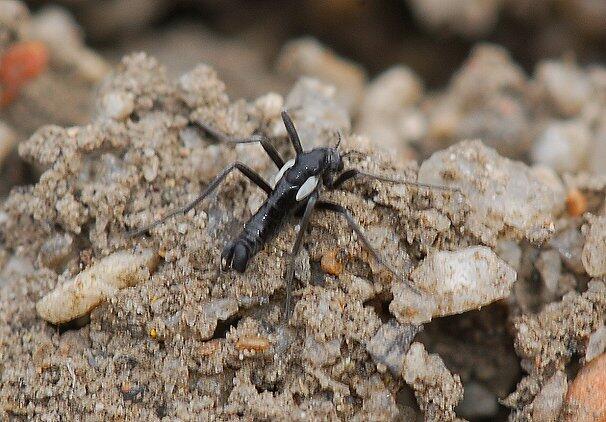
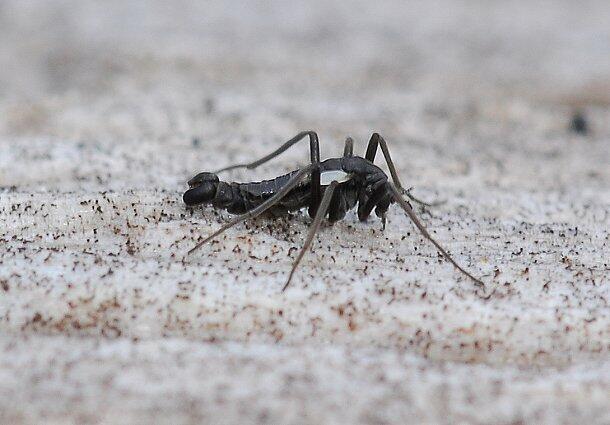
A tiny black flightless Chironomid midge with white wings averaging around 3 mm in length. They are so small you really need to be looking to find them. Both sexes are black with reduced antennae, reduced white wings, and gray tibiae and tarsi.
There are about 15 Nearctic Bryophaenocladius species, but this is the only one in which adults are brachypterous (have shortened wings) and where males have a hypopygium inversum. The pupae are unique among the Bryophaenocladius in having a prefrons with three pairs of very small setae. The larvae are not currently separable from other species of Bryophaenocladius.
This species is known exclusively from Heggie’s Rock, a porphyritic granite outcrop in Columbia County, GA protected by The Nature Conservancy. Uneven weathering over millennia produces solution pits on the rock surface, and when a thin layer of soil accumulates in the pit and rare outcrop plants begin to colonize it the pool is called a dish garden. The larvae live in the dish gardens on the rock surface, and the adults are usually found near the pools also since they are flightless. The midge has been seen previously at other examples of this type of porphyritic granite outcrop nearby, but all have now been quarried and this is believed to be the only extant population. Examples of this type of granite are restricted to the Appling Pluton, which occurs only within Columbia County.
The larvae construct detritus tubes on the substrate of their pools and feed on detritus.
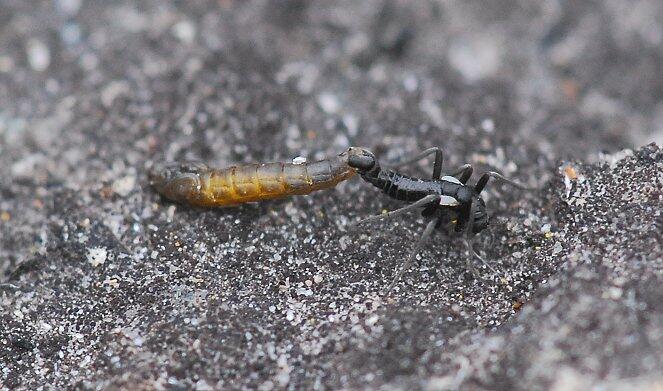
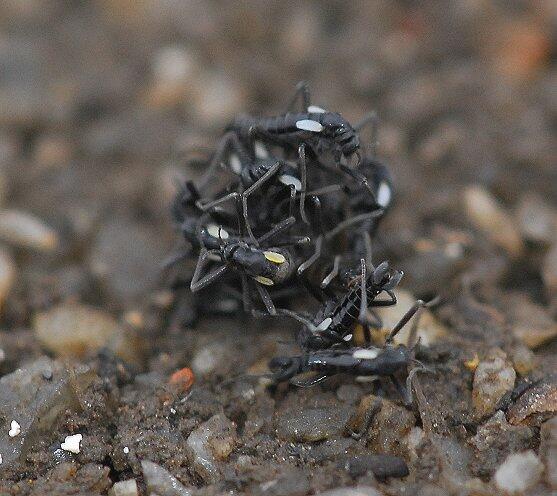
Eggs are deposited in late fall or early winter. Much is unknown about larval biology including the length of this stage. The larvae live and develop in ephemeral pools on the outcrop face. Adults emerge between mid-November and mid-January and mate immediately. Some females are aggressively mounted by males while they are still pupae. Adult females may sometimes be surrounded by males attempting to mate with them in a “mating ball.”
First, survey existing pools on Heggie’s Rock to determine how many pools and where on the rock face this species exists. There is currently no accepted protocol to search for the larvae so these surveys would need to be during the emergence period. Secondly, to search for any other un-quarried examples of Appling Pluton porphyritic granite outcrops nearby to see if there remains any intact habitat harboring this species. Finally, surveys are also needed to search other nearby outcrops (other than Appling Pluton) to see if perhaps the species occurs there.
Exclusively known from the 101-acre Heggie’s Rock outcrop in Columbia County, Georgia.
While the only known site is currently protected, nearby activities or processes (such as acid rain) could degrade the habitat. The most significant threat right now is large populations of the introduced fire ant (Solenopsis invicta), which may consume eggs or larvae. Unsupervised use of the rock face by excessive hiking or ATVs is a significant threat from the growing greater Augusta area. If there are any other sites that harbor this midge, they need to be located and also protected.
| Threat 1 | Threat 2 | Threat 3 | |
|---|---|---|---|
| General Threat | Natural system modifications | None | None |
| Specific Threat | None | None | None |
S1 for Georgia: only one known currently extant population.
Maintain the pristine ephemeral shallow pools on the rock surface and protect access.
Andersen, T., Sæther, O. A., Cranston, P. S. & Epler, J. H. 2013. 9. The larvae of Orthocladiinae (Diptera: Chironomidae) of the Holarctic Region — Keys and diagnoses. pp. 189–386. In: Andersen, T., Cranston, P. S. & Epler, J. H. (Sci. eds): The larvae of Holarctic Chironomidae (Diptera) of the Holarctic Region — Keys and diagnoses. Insect Systematics & Evolution, Supplement 66: 1- 571
Epler, J.H. 2012. A brachypterous Bryophaenocladius (Diptera: Chironomidae: Orthocladiinae) with hypopygium inversum from Heggie’s Rock, Georgia, U.S.A. Zootaxa 3355: 51-61.
Giff Beaton
22 Dec 2020