

Loading profile. Please wait . . .
Cladonia evansii Abbayes
Powder-puff; Deer Moss




Federal Protection: No US federal protection
State Protection: No Georgia state protection
Global Rank: G3G5
State Rank: SNR
Element Locations Tracked in Biotics: No
SWAP 2015 Species of Greatest Conservation Need (SGCN): No
SWAP 2025 Species of Greatest Conservation Need (SGCN): No
2025 SGCN Priority Tier:
Element Occurrences (EOs) in Georgia: 0
Habitat Summary for element in Georgia: Mesic to subxeric woodlands, roadsides
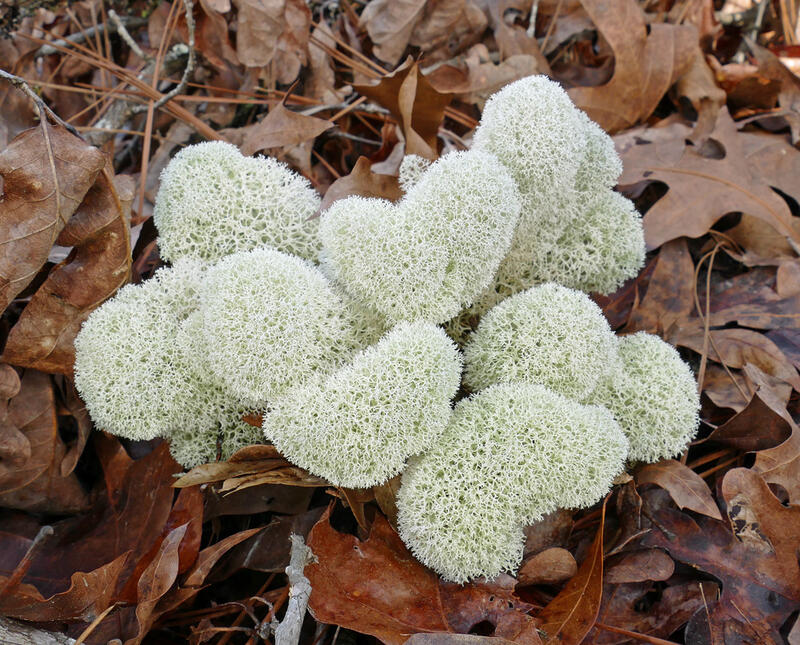
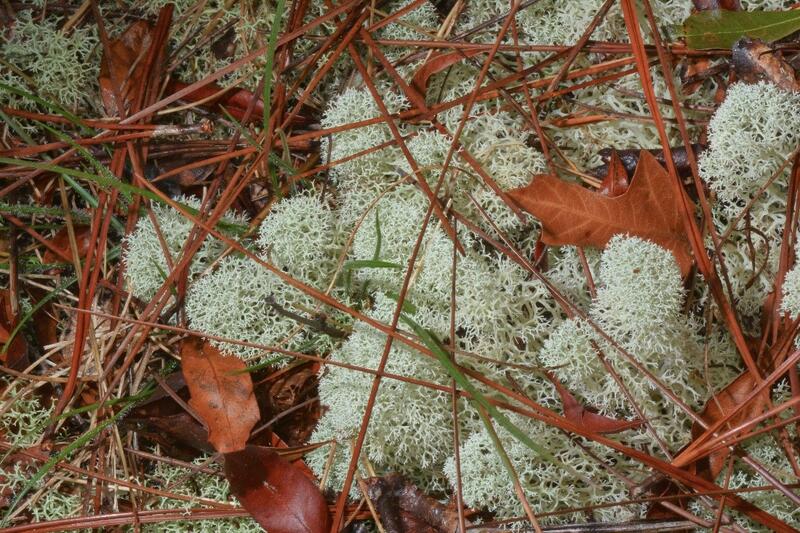
Pale green to whitish thallus composed entirely of podetia, growing in small, tight tufts or clumps about 2-6 cm across; tufts solitary or aggregated; inner, larger branches sometimes exposed & usually white, but outer branches to tips fine & much divided, giving a relatively solid appearance to the tufts; occasionally forming extensive mats of fairly continuous groundcover, especially in more mesic portions of sandhills; CHEMISTRY: thallus UV + blue-white; FIELD ID: usually unmistakable (see Beaton photo below), but ambiguous "reindeer" Cladonia are seen & best left at genus
Cladonia sandstedei clumps often tufted and white-gray in color, but branching much coarser & never forming discrete, finely branched tufts; Cladonia subtenuis is usually greener & always more coarsely branched; both these species are UV-
Cladonia sandstedei
Mesic to subxeric woodlands, roadsides, on sandy soil, detritus
Terricolous fruticose lichenized fungus, photobiont a chlorococcoid alga in genus Trebouxia or Pseudotrebouxia
None
Mostly Coastal Plain; a few records from large Piedmont granitic outcrops
Inappropriate fire management threatens largest populations at protected sandhill sites, when fire is forced into all fuels with excessive ignition
Common to abundant
Allow fire to be patchy in extensive sandhills by limiting ignition to edges of burns
Brodo, I. M. 2001. Lichens of North America. Yale University Press, New Haven, Conn.
Brodo, I. M. 2016. Keys to lichens of North America: revised and expanded. Yale University Press, New Haven, Conn.
Esslinger, T. L. 2021. A cumulative checklist for the lichen-forming, lichenicolous and allied fungi of the continental United States and Canada. Version 24. Opuscula Philolichenum 20: 100-394.
Malcolm Hodges
13 May 2022