

Loading profile. Please wait . . .
Ovicuculispora parmeliae (Berk. & M. A. Curtis) Etayo
Peritheciate parasite




Federal Protection: No US federal protection
State Protection: No Georgia state protection
Global Rank: GNR
State Rank: SNR
Element Locations Tracked in Biotics: No
SWAP 2015 Species of Greatest Conservation Need (SGCN): No
SWAP 2025 Species of Greatest Conservation Need (SGCN): No
2025 SGCN Priority Tier:
Element Occurrences (EOs) in Georgia: 0
Habitat Summary for element in Georgia: Follows hosts
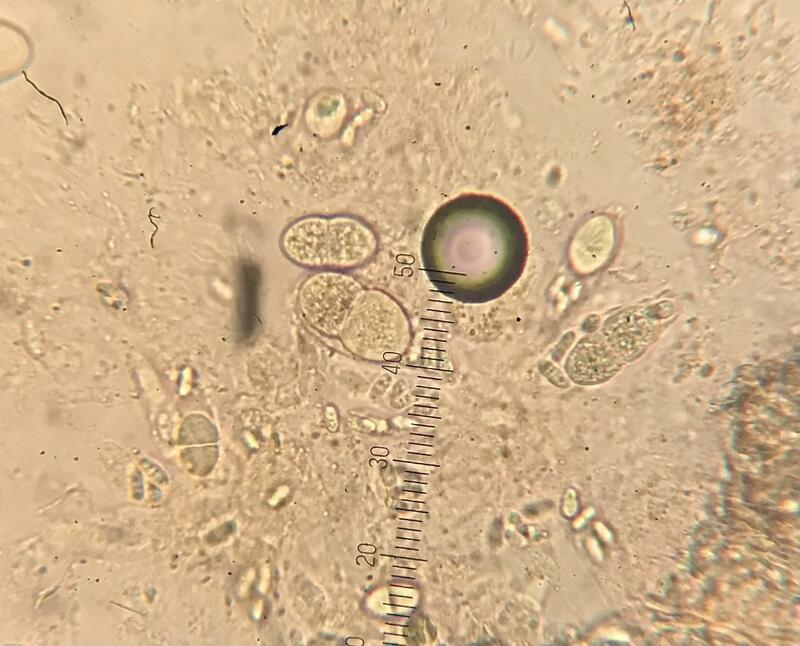
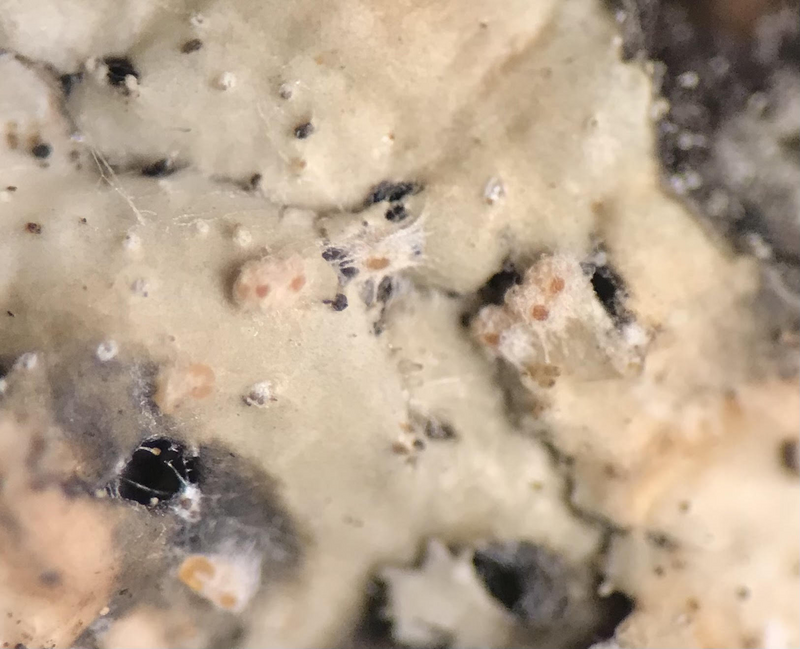
Pale pink, fuzzy, globose perithecia sessile on surface of host, sometimes crowded; ostiole is a darker pink, orange or red at summit; MICROSCOPY: spores colorless, transversely septate, of 2 distinct sizes, larger 22-29.5 µm long, smaller 8-11.5 µm long
Trichonectria rubefaciens is on different hosts, & has uniformly sized spores
None
Difficult to characterize due to numerous hosts in Ga.: Canoparmelia, Cladonia, Flavoparmelia, Heterodermia, Parmotrema, Physcia, Punctelia, Xanthoparmelia
Lichenicolous peritheciate fungus, hosts foliose or squamulose lichens
None
Statewide
Unknown
Uncommon
None
Esslinger, T. L. 2021. A cumulative checklist for the lichen-forming, lichenicolous and allied fungi of the continental United States and Canada. Version 24. Opuscula Philolichenum 20: 100-394.
Lendemer, J. C., R. C. Harris & A. M. Ruiz. 2016. A review of the lichens of the Dare Regional Biodiversity Hotspot in the Mid-Atlantic Coastal Plain of North Carolina, Eastern North America. Castanea 81: 1-77.
Malcolm Hodges
11 May 2022