

Loading profile. Please wait . . .
Usnea trichodea Ach.
Bony Beard




Federal Protection: No US federal protection
State Protection: No Georgia state protection
Global Rank: G5
State Rank: SNR
Element Locations Tracked in Biotics: No
SWAP 2015 Species of Greatest Conservation Need (SGCN): No
SWAP 2025 Species of Greatest Conservation Need (SGCN): No
2025 SGCN Priority Tier:
Element Occurrences (EOs) in Georgia: 0
Habitat Summary for element in Georgia: Woodlands, forests, swamps
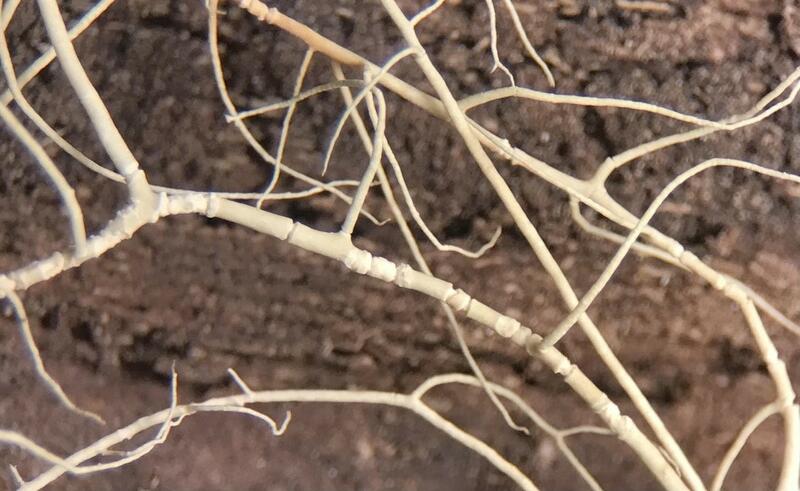
Gray-green thallus of terete branches with an elastic (when wet) or hard central cord or axis; thallus pendent, wispy, with long, narrow, graceful branches, the largest with swollen cracks in rings around branches, resembling articulations in bones; long, narrow fibrils/side branches sparse, isidia & soralia absent; medulla narrow, dense, white, axis narrow, brown; CHEMISTRY: medulla either K+ yellow, PD+ orange (constictic acid), or K-, CK+ orange (diffractaic acid), sometimes also KC+ orange (barbatic acid); FIELD ID: swollen joints, very fine branches lacking soralia or isidia make this beard lichen unmistakable; perform field K test if any question
Usnea subgracilis could be confused with this species in the mountains, but it has sparse isidia & a PD+ red medulla
Usnea baileyi, U. dimorpha
Woodlands, forests, swamps; substrates: hardwood bark: 21% Quercus & 29% other hardwoods or unknowns; conifer bark: 26% Taxodium, 21% Juniperus & 1 record on Pinus
Corticolous fruticose lichenized fungus, photobiont a green alga (Trebouxia?).
None
Statewide, though most records are from the Coastal Plain & Southern Blue Ridge (perhaps one of our most pollution-sensitive species)
Unknown
Uncommon
None
Brodo, I. M. 2001. Lichens of North America. Yale University Press, New Haven, Conn.
Brodo, I. M. 2016. Keys to lichens of North America: revised and expanded. Yale University Press, New Haven, Conn.
Esslinger, T. L. 2021. A cumulative checklist for the lichen-forming, lichenicolous and allied fungi of the continental United States and Canada. Version 24. Opuscula Philolichenum 20: 100-394.
Tripp, E. A. & J. C. Lendemer. 2020. Field guide to the lichens of Great Smoky Mountains National Park. The University of Tennessee Press, Knoxville.
Malcolm Hodges
2 August 2022